Alton Towers

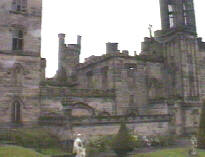
Alton Towers was originally called Alton Abbey and was begun by the 15th Earl of Shrewsbury in 1814. It was added to and altered for several years afterwards.

In 1827 the 15th Earl died and was succeeded by his nephew the 16th Earl, John Talbot who was Pugin�s friend and patron. The patronage from the Earl and his financial support enabled Pugin to build and furnish his catholic churches.

The 16th Earl continued to build at Alton Towers. He built a wing of state appartments and the chapel which was finished in 1834. The Earl who had met Pugin in London invited Pugin to stay at Alton Towers (which he did often thereafter) and asked him to furnish and internally decorate the chapel and the great hall.
Alton Towers
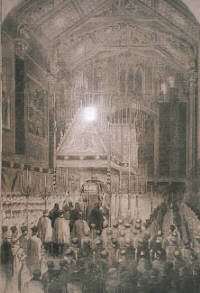
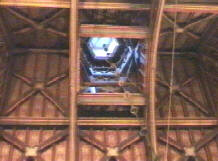
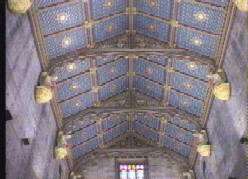
roof of chapel In 1837 Pugin began work, in the chapel he designed the altar, reredos and the screen behind. Which are now all at Bromsgrove RC Church. On the right is a picture of the 16th Earls funeral, taking place in the chapel, and on the left is the roof of the chapel as it is now, the rest of it has been stripped of it's magnificent trimmings and panelling. The earl died in November 1852 just two months after Pugin. drawing of interior
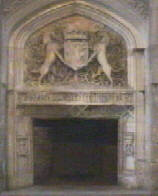
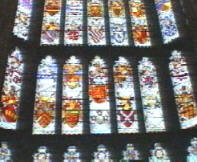
In the great hall he put in two large gothic fireplaces with the Talbot dogs carved in stone. A huge stained glass bay fronted window with glass by Hardman, a wooden arched ceiling which leads up to a small turret in the middle of it, from which light permeates into the hall. There was also a minstrels gallery.

Pugin was apt to be rather bossy and liked to tell the Earl what he thought ought to be done, for the most part the Earl agreed. However for the great hall the Earl designed something that Pugin considered �fit only for a hotel�, but with Lady Shrewsbury�s intervention the room was built as Pugin had intended.

Alton Towers is sadly in a great state of dis-repair, but it is no less magnificent and is currently being lovingly cared for.

wooden ceiling fireplace stained glass window

Return to the Pugin Home Page
This original work was created for the World Wide Web by Victoria Farrow, with the support of the Pugin Society. It was constructed by Mike Farrow of Channel Business Internet Systems.