Pugin�s Political Era
The Monarchy
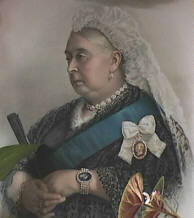 Pugin saw four monarchs in his lifetime, George 111rd 1760-1820, George IVth 1820-1830, William IVth 1830-1837 and Victoria 1837-1901.
- George 111rd, born 1738, he was the founder of the Royal Academy of Arts in 1768. Known as �Farmer George� he enjoyed agriculture, a family man who died of an hereditary disease which caused tempory insanity known as porphyia. He died six days after his son Edward on 29th Jan, was married to Charlotte and had eight children.
- George IVth born 1762, was wild and rebellious, extravagant with women, drink, gambling and racing. Britain was at war with France and was plunged into poverty, causing resentment at his lifestyle. He was married to Caroline of Brunswick and had one daughter.
- William IVth was a gruff navy man, born 1765, George the 111rd's son. The Great Reform Act was passed during his reign, allowing many more men to vote, at his death the crown passed to his niece.
- Victoria became a symbol of Britians' confidence and solidarity, born 1819 to Edward, George the 111rd's son. She was welcomed with delight to the throne, after three kings the British people were pleased to have a young Queen. She was the first monarch to appear in a film, use a telephone, travel by train, use a lift, make a gramaphone record, and have her photograph taken.
The Country
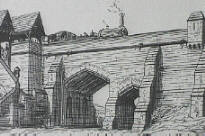 When she came to the throne Britain still composed of small towns and villages using stage coaches for travelling between them. Most people lived and worked in the countryside.
By the end of her reign, Manchester, Sheffield and Birmingham had become cities that were so big they encroached on the countryside. People worked in factories, railways joined the towns and cities and motor cars were in use. Gas lighting was available, as was the telephone and it was possible to travel on the underground. People sent christmas cards and the penny post was established.
Some important dates during Pugin's lifetime
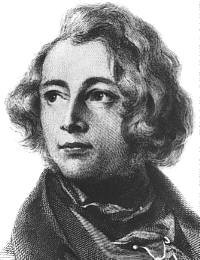
- 1812
- Charles Dickens (author) born February 7th
- 1813-1820
- Nash�s Regent Street in London is constructed
- 1828
- University of London is opened
- 1829
- Metropolitan Police formed
- 1833
- The Oxford movement is launched
- 1834
- Dickens publishes Sketches by Boz, Houses of Parliament burnt down
- 1836
- Act for the registration of births, marriages and deaths is passed
- 1837
- Victoria comes to the Throne
- 1840
- She marries Prince Albert of Saxe Coburg
- 1846
- Irish potatoe famine
- 1844
- The first telegraph line is laid
- 1847
- Dickens publishes Dombey & Son, Charlotte Bronte publishes Jane Eyre, William Thackery publishes Vanity Fair, Marx & Engels publish The Communist Manifesto
- 1848
- Cholera epidemic
- 1851
- The Great Exhibition, The window tax repealed, Wordsworth dies
Return to the Pugin Home Page
This original work was created for the World Wide Web by Victoria Farrow, with the support of the Pugin Society. It was constructed by Mike Farrow of Channel Business Internet Systems.