The Harbour.
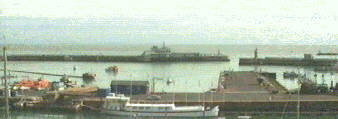
The Harbour. | |
| The harbour of Ramsgate is very much as Pugin would have seen it. The inner basin, the clock house, lighthouse and obelisk. Pugin was not too keen on paying harbour dues, so often he kept his boat 'The Caroline', beneath his house on the beach. His boat was a wrecker or lugger, this type of craft went out to boats in trouble and lifted off their cargo, assisted the crew and then got paid salvage money. |
|
Rose Cottage. | ||
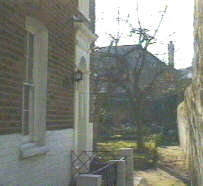
| Up the hill with the harbour on your left going west, you come to Rose Hill. This is where Pugin's aunt, Selina Welby lived from 1832 to 1834 and where Pugin visited her in her house Rose Cottage. | |
11 Nelson Crescent. | |
| Walking on in the same direction you reach 11 Nelson Crescent, this is where Mr. Alfred Luck lived he was a friend and a benefactor, Pugin bought his lugger 'The Caroline' together with Mr. Luck for seventy pounds. The monastery was financed by Alfred Luck, in 1856 he turned his house into a college for gentleman's sons. He is buried in St. Augustines Church. | 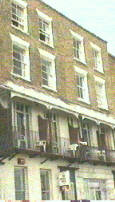
|
No. 1 Royal Crescent. | |
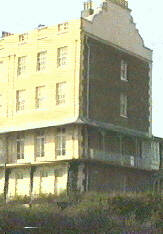
| I Royal Crescent, St Augustines Road, is the only residence that Pugin thought suitable for his friend and Patron the Earl of Shrewsbury to rent when he came to visit Pugin. This is curious as the style in which it is built is classical Regency, everything Pugin despised. |
West Cliffe. | |
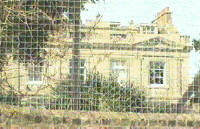 Further on is West Cliff Lodge looking out over the sea, and originally built by a Mr. Benson and named Royal Villa. He was Helen Lumsden's uncle, and she became engaged to Pugin after the death of his second wife. Her family told her to break it off, Pugin was most upset and visited Mr. Benson for comfort.
| |
Chartham Terrace. | |
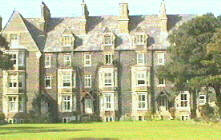 | Next to West Cliff Lodge is Chartham Terrace, this plot of land was purchased by Charles Habershon. He was a rival to Pugin, an architect who was older and as keen a protestant as Pugin was a catholic. He intended to build his house in an opposing style to Pugin. |
St. Augustine's. | |
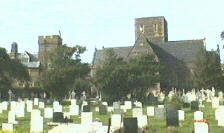 Right next door is Pugin's own church, St Augustine's, which he designed and built himself. He collected the materials and the craftsmen together to build it, according to his own True Principles. The other side of the graveyard wall is The Grange, the house that Pugin built for himself and his family, overlooking the sea.
| |
Note | |
| It is interesting to note that two famous men lived in Ramsgate. In 1837 Sir. Moses Montefiore bought and lived in East Cliff Lodge, he built the first synagogue in Ramsgate. In 1840 Pugin bought the land on the West Cliff and built the first catholic church in the town. They also both died in the town, Montefiore in 1885, is buried in his family mausoleum, and Pugin in 1852, buried in the family vault. | |